
The Legend of Phewa Lake and the Tal Barahi Temple
Before it was a beautiful lake, a prosperous village stood where Phewa Lake is today. Read the captivating local myth of a disguised Goddess, a great flood, and the single act of generosity that created the island of Tal Barahi Temple.
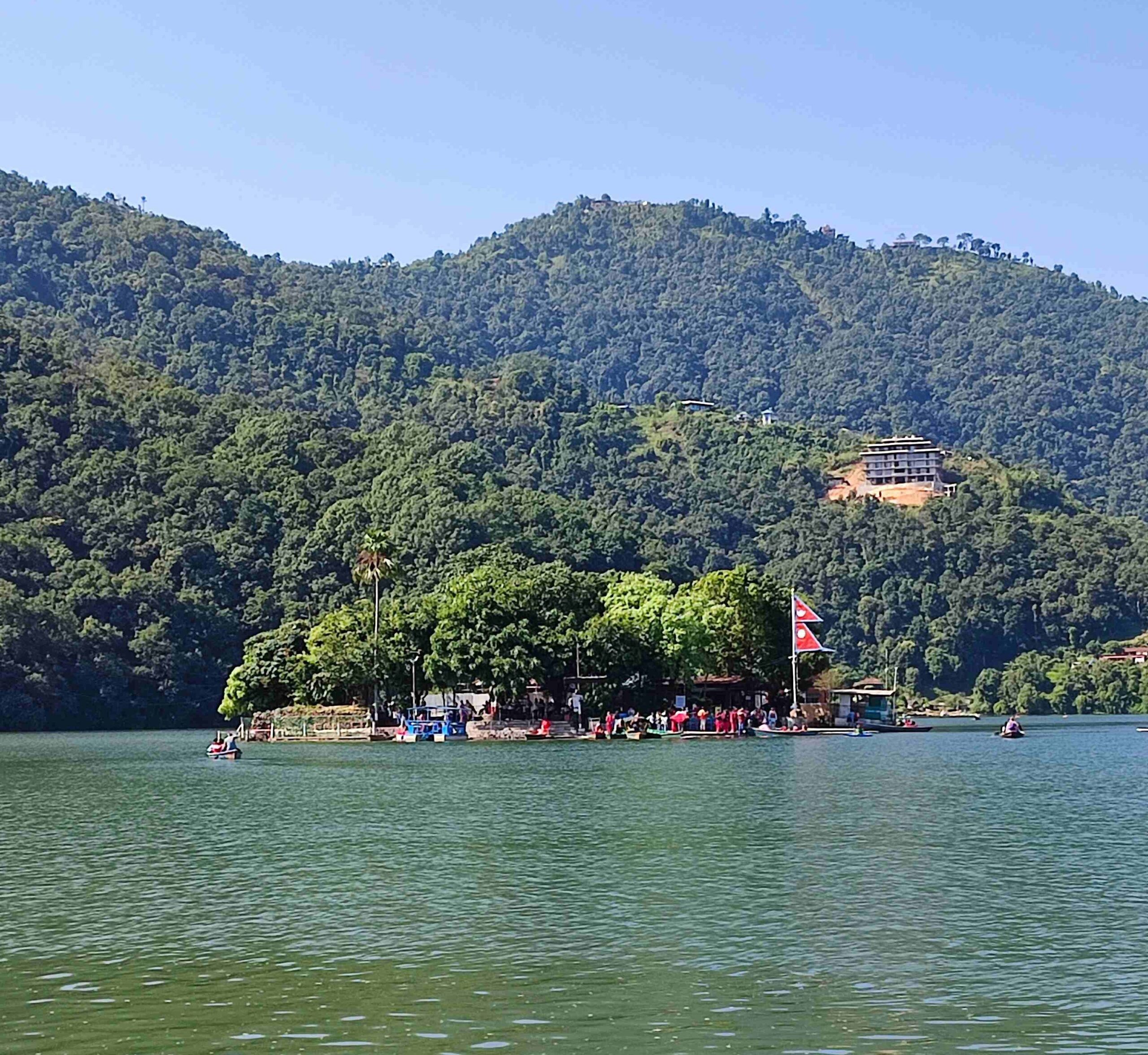
Right in the middle of Pokhara’s beautiful Phewa Lake sits a small island, home to the famous Tal Barahi Temple. But long before this spot became a popular destination, it is believed that a beautiful village stood right where the lake is today. Just a few hundred years ago, there was no lake! A local legend speaks of this quiet village, a massive flood, and how one simple act of kindness changed everything. Here is the local legend of Phewa Lake and the Tal Barahi Temple.
A Stranger Comes to Village
Long before Phewa Lake existed, a prosperous village stood in its place. While most of the villagers lived comfortably, one poor old woman lived all alone in a small, thatched hut on the edge of village.
One evening, a wandering Jogi—a Hindu monk—arrived in the village seeking shelter for the night. He knocked on door after door, but every wealthy neighbor turned him away. Finally, with nowhere else to go, he reached the old woman’s humble hut.
The Act of Kindness
When the Jogi asked to stay, the old woman welcomed him in. But she was very poor. She told him, “You can stay here, but all I have to eat are some rice husks.”
The Jogi smiled and gladly accepted. The old woman ground the husks to make a simple flatbread, and they shared the small meal. The Jogi then went to sleep on her porch.
Jogi Tells a Secret
The next morning, as the Jogi was getting ready to leave, he told the old woman a huge secret. He wasn’t just a normal traveler. He was actually the Goddess Barahi in disguise!
The Goddess was so touched by the old woman’s kindness that she gave her a warning. “Soon, this whole valley will flood, and the village will go underwater,” the Goddess said. “Go to the highest ground you can find right now so you can be safe.”
The Great Flood
The old woman panicked and rushed to tell her villagers. She begged them to move to higher ground. Sadly, no one believed her. They thought she was making it up.
Left with no choice, she climbed to the highest hill in the village all by herself.
Not long after, heavy rain started to fall. A massive flood swept through the valley, drowning the entire settlement. That flooded valley became Phewa Lake. The only dry spot left was the top of the hill where the old woman stood. Today, that hilltop is the island in the middle of the lake.
The Great Flood
The old woman lived peacefully on that island for the rest of her days. After she passed away, locals started worshipping Goddess Barahi on that exact spot to honor the deity who saved her.
Years later, King Kulmandan Shah of Kaski built a simple temple there with a straw roof, after Goddess Barahi appeared in his dream and instructed him to do so. Much later, in 1960, King Mahendra rebuilt it into the beautiful pagoda-style temple you see today.
A Story That Lives On
Today, the Tal Barahi Temple is more than just a religious site. It’s a reminder of how powerful kindness can be. When you take a wooden boat across Phewa Lake to visit the temple, you aren’t just seeing a beautiful landmark. You are standing on the very spot where a poor old woman’s kind heart saved her life.
Check out the footages of Phewa Lake and the Temple
- Footage taken from a boat, on the way to the temple island: https://youtube.com/shorts/I-_NsqFKkzQ?feature=share
- Temple surrounding, footage taken from the island: https://youtube.com/shorts/Zoxd_obHNpo
About the Writer: Sachin Giri is the founder of Nepal Revives, content creator and children story-book writer. He holds a Bachelors in Journalism and Executive MBA in Marketing and Finance.

